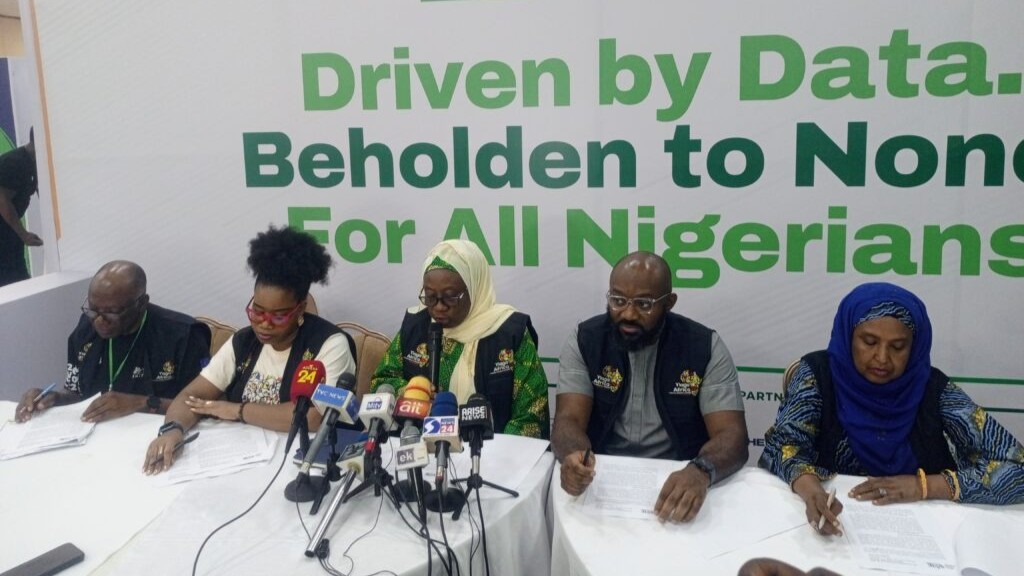
Civil society organisation, Yiaga Africa, has described the forthcoming Ekiti State governorship election as a defining moment for Nigeria’s electoral system, warning that issues of security, vote buying and voter participation could influence the credibility of the exercise.
The organisation made the remarks during a pre-election briefing in Ado-Ekiti ahead of the June 20 governorship poll, which will be the first state election conducted under the Electoral Act 2026.
According to Yiaga Africa, the election offers an opportunity to assess the effectiveness of new electoral provisions, especially those relating to electronic transmission of results and result collation procedures.
With more than one million registered voters expected to cast their ballots across 2,445 polling units in 16 local government areas, the election is also expected to provide an early indication of the readiness of electoral institutions ahead of the 2027 general elections.
While commending the Independent National Electoral Commission (INEC) for preparations already undertaken, including training of officials, stakeholder engagements and mock accreditation exercises, Yiaga Africa noted that the process revealed implementation gaps that require urgent attention before Election Day.
The group also expressed concern over security challenges in some parts of the state. It identified Ado-Ekiti, Ikole, Oye and Ikere as areas requiring close monitoring, while warning that recent kidnapping incidents in Ilejemeje and Moba LGAs could pose risks to the movement of election personnel and materials during the collation process.
Yiaga Africa further cautioned that vote buying remains a major threat to electoral integrity, arguing that worsening economic conditions may increase the temptation for politicians to influence voters with financial inducements. The organisation stressed that such practices undermine the democratic process and weaken public confidence in election outcomes.
It also warned that voter turnout may be affected by perceptions that the election outcome is already predictable, despite continued political awareness and civic engagement among citizens.
According to the organisation, the credibility of the election will be measured by three key factors: the preparedness of election managers, the transparency of the voting and results process, and the neutrality of security agencies. It said these factors would determine whether the election strengthens public trust in Nigeria’s democratic institutions or further deepens existing concerns.
To independently monitor the exercise, Yiaga Africa announced plans to deploy its Watching The Vote (WTV) observation mission across the state. The initiative will involve hundreds of trained observers tasked with tracking voting, counting and result collation processes, while also verifying the accuracy of official results announced by INEC.
The organisation will also utilise its Election Result Analysis Dashboard (ERAD 2.0), an enhanced technology-driven platform designed to analyse polling-unit results uploaded to the INEC Result Viewing Portal and assess the effectiveness of electronic result transmission under the new electoral framework.
Yiaga Africa called on INEC, security agencies, political parties and voters to uphold democratic principles throughout the electoral process. It also urged authorities to take firm action against vote buying and other electoral offences to ensure that the election reflects the genuine will of the people.
The organisation maintained that the outcome of the election will extend beyond Ekiti State, serving as a crucial indicator of the effectiveness of Nigeria’s electoral reforms and the country’s readiness for future elections.