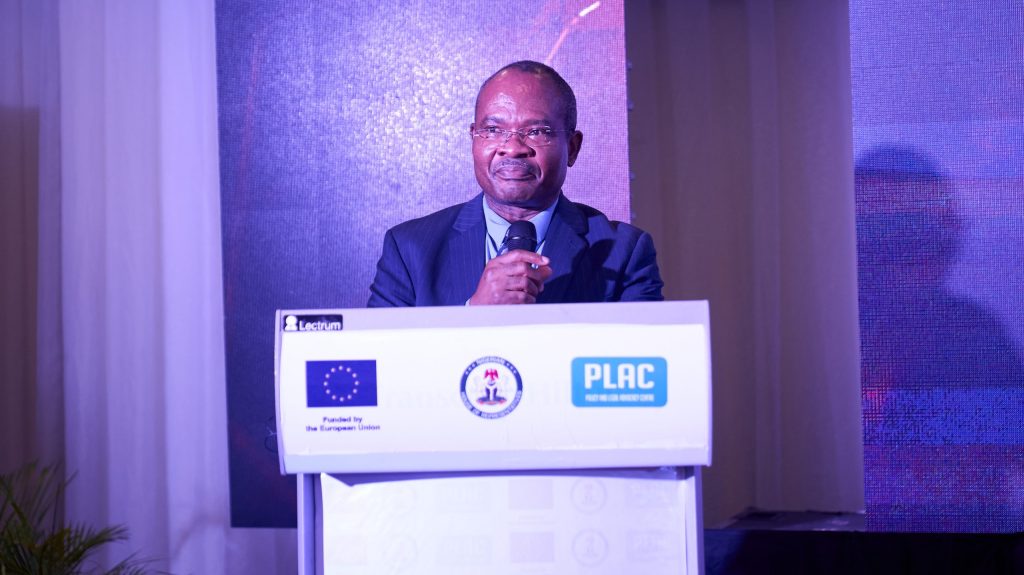
The European Union, through its Support for Democratic Governance in Nigeria (EU-SDGN II) programme, recently convened a dinner that brought together female legislators across Nigeria to engage on women’s political representation in the country.
The event, which is a part of the EU’s broader plan to galvanise support for the Reserved Seat Bill – HB1359, also brought members of the diplomatic community, civil society leaders, and development partners to engage on the possibilities of leveraging the ongoing constitution review to advance talks around women’s political participation.
Ambassador of the European Union to Nigeria and ECOWAS, Gautier Mignot, set the tone for the evening with a deeply personal yet hopeful message. “I am very pleased to be here with you tonight,” he said, “and that the European Union is supporting not only the legislative work and constitutional review of the National Assembly, but encouraging debates and discussions like the one taking place tonight, because this is what democracy is about.”
Drawing from international experience, Ambassador Mignot emphasised that change is possible. “In 20 years, Mexico transformed from having few women in politics to electing a female president. Nigeria can follow that path. It must.”
He concluded with a powerful reminder: “This is not a favour to women. It is a favour to society. Mixed leadership performs better. It’s proven – in classrooms, in companies, and yes, in parliaments too.”
Deputy Speaker of the House of Representatives and Chairman of the Constitution Review Committee, Benjamin Kalu, urged women in the country to acquaint themselves with the spirit and letters of the bill, as this will essentially strengthen their advocacy. He took out time to highlight the design and gains of the bill, insisting that women must unite for the bill to see the light of day.
Executive director of Policy and Legal Advocacy Centre (PLAC), Clement Nwankwo, highlighted the stark imbalance. “Less than 4% of legislative seats are held by women. In some states, even women affairs committees are chaired by men.” His call to action was unambiguous: “Let’s ensure this bill passes – it could be Nigeria’s most significant constitutional amendment since 1967.”
A member of the House of Representatives Constitution Review Committee and a longstanding supporter of women in leadership, Hon. Wale Oke, drummed up support for the reserved seat bill saying, “I’ve had women as my best managers. This is not about favours. It’s about performance, representation, and justice.”
From the state level, the Deputy Speaker of Ekiti State House of Assembly, Rt. Hon. Bolaji Olagbaju, allay the fears of critics that Nigerian women are not out for competition with their male counterparts. “We’re not here to rub shoulders or drag tables. We are pleading – help us pass this bill,” she urged, her voice echoing the emotion of decades of advocacy.
Representing the Minister of Women Affairs, Hajiya Imaan Sulaiman-Ibrahim, the permanent secretary of the ministry, Dr. Maryam Keshinro, appreciated women champions, including Nigeria’s President Bola Tinubu, the European Union, among others, for supporting the cause of women in Nigeria.
As dinner was served, what lingered was more than fine cuisine – it was solidarity, resolve, and a collective push to ensure Nigerian women finally have a fair seat at the table.
The Reserved Seat Bill targets a remarkable 185 seats exclusively for women.