The European Union Support to Democratic Governance in Nigeria (EU-SDGN) programme has convened a high-level expert methodology review session to advance a comprehensive midterm assessment of Nigeria’s Tenth National Assembly, reinforcing efforts to strengthen legislative performance and democratic accountability.
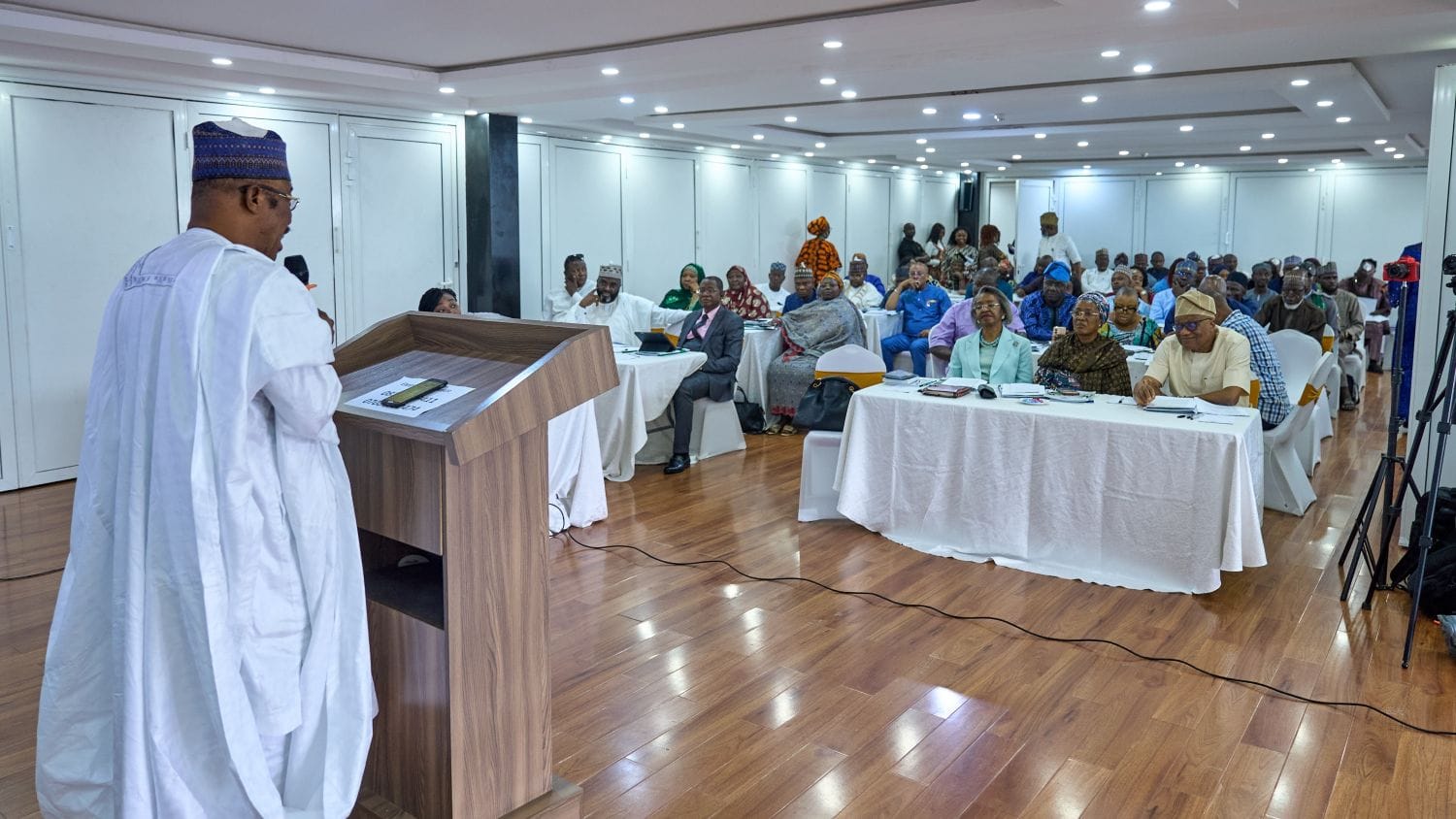
The session, held with governance experts, researchers and civil society actors, focused on validating a comparative methodology designed to assess the Senate and the House of Representatives on responsiveness and effectiveness in the discharge of their constitutional mandates.
Declaring the session open, the Programme Officer of Yaiga Africa, Cynthia Mbalom, said the initiative underscores the EU-SDGN’s commitment to deepening democratic institutions in Nigeria.
“Our program is designed under the EU-SDGN to provide support to the legislative arm of government, and that is to strengthen the National Assembly,” she said. “For democracy to function effectively, we need an active and functional National Assembly, especially within our unique presidential system where there is always a tendency toward an overbearing executive.”
She described the National Assembly as “one of the key institutions that enables democracy to survive,” stressing that a functioning and independent legislature remains central to restoring public confidence in democratic governance.
According to her, the assessment adopts a comparative approach examining both chambers in line with their constitutional mandates of lawmaking, oversight and representation. “This is essentially a midterm review,” she noted, explaining that the study will examine strengths, levels of independence, oversight delivery and the quality of representation from 2023 to date, with the aim of releasing findings before June 2026.
Leading the technical presentation, Professor Adewale Aderemi explained that the study introduces a “relatively novel” approach. “Rather than scoring performance in a conventional manner, this study adopts a comparative approach,” he said. “It seeks to examine how each chamber has performed across specific indicators, focusing on responsiveness and effectiveness.”
Under responsiveness, the study will examine human rights, constituent engagement, electoral reform and citizen access. Effectiveness will be measured through communication systems, legislative process proficiency and bill initiation patterns, including executive and private member bills.
Professor Aderemi added that the methodology adopts a most similar case design, comparing two institutions operating within the same political and constitutional environment to explain performance differences. The research will employ mixed methods, including key informant interviews, focus group discussions, structured surveys and extensive desk review across twelve purposively selected states nationwide.
The findings from the exercise are expected to generate evidence-based recommendations to strengthen legislative practice and consolidate Nigeria’s democratic gains.