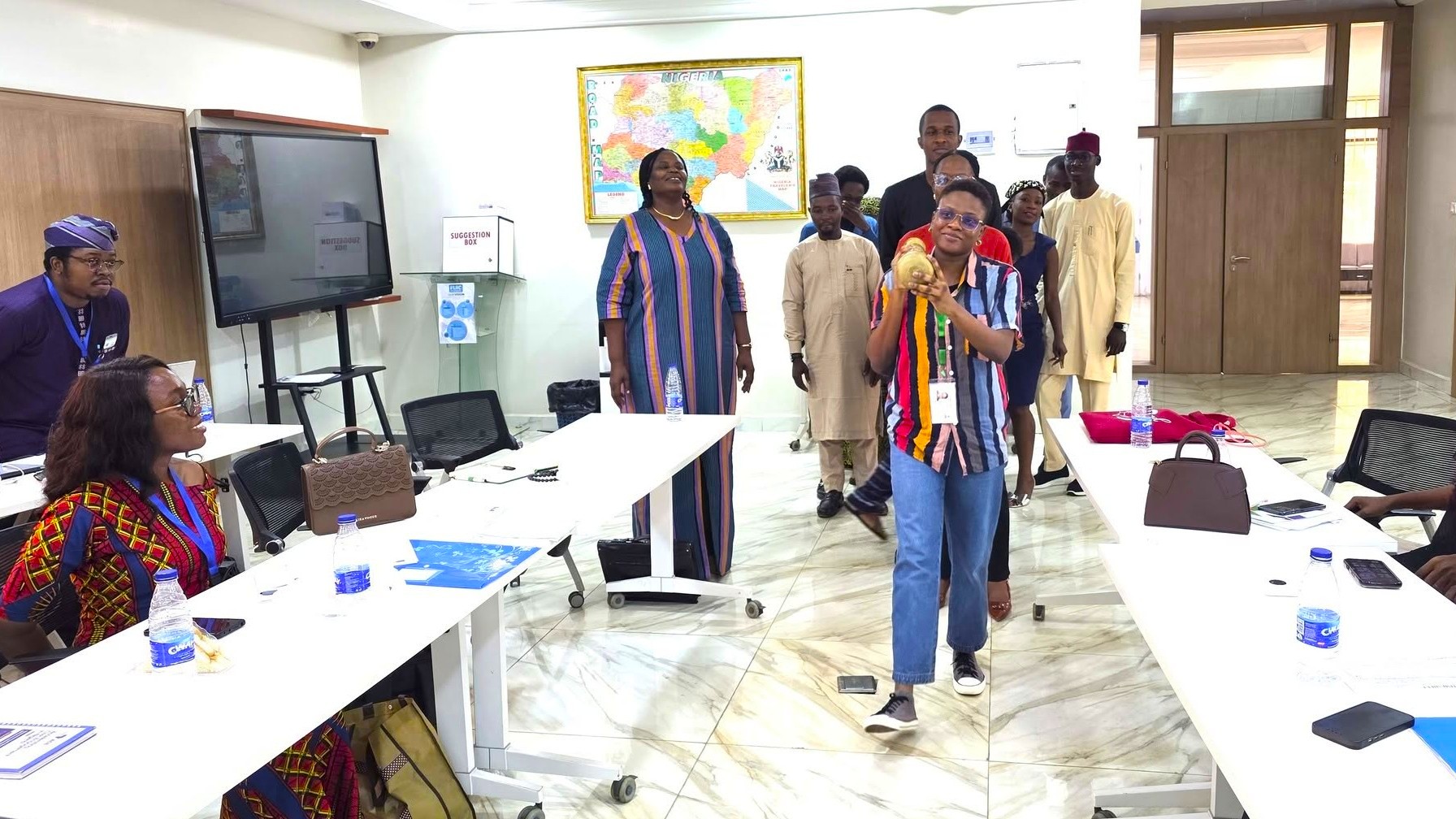
The European Union Support to Democratic Governance in Nigeria (EU-SDGN) on Thursday hosted alumni of the Legislative Internship Programme in Abuja, bringing together past participants to connect with colleagues from the 2025 cohort and strengthen the growing alumni network.
The interns, selected and deployed by the Policy and Legal Advocacy Centre (PLAC) to the National Assembly, gathered to reflect on their experiences and discuss ways to remain relevant, connected, and engaged in opportunities that advance democratic governance.
Welcoming the alumni, Nkiru Uzodi, Programme Manager at PLAC, said the gathering was about “connection, catching up, and meeting colleagues,” stressing that the programme has endured because of its impact. She noted that once the current cohort concludes, the alumni community will number over 400 members.
Uzodi expressed appreciation to the European Union for its long-standing support and to the National Assembly for consistently opening its doors to young Nigerians.
“The internship is the starting point for many of you, but it is your journey, your career, your leadership, your impact, involvement in civil society, in the private sector, and even at home and beyond,” she said.
She added that PLAC is proud that alumni continue to show up whenever called upon, describing their presence as “a testament to what partnership means.”
She further encouraged alumni to share insights, challenges, and ideas on how to sustain the network, emphasising that the programme’s future depends on collective ownership.
Some of the Alumni gave testimonies of how their lives and careers took a turn after the internship programme.
Abiye Alambo Briggs, who represented Rivers State in the 2020 Legislative Internship Programme, shared how the experience propelled him into public service.
“Right after it, I got an appointment with my serving Senator. My involvement with PLAC was quite enlightening; it gave me the vigour to get into public office, and I have grown. I have supported numerous bills, public hearings, over 15–20 bills that reached second and third readings, and I’m also involved in constituency engagements. Through this initiative, I have grown personally and career-wise,” he said.
“I want to give credit to the Legislative Internship Programme because I have used it as an opportunity to grow as a person, and I believe many more young folks will continue to need such an opportunity. Thank you PLAC and thank you EU.”
Amrah Aliyu, an alumna from the 2022 cohort, described her journey as transformative.
“PLAC’s experience, from the National Assembly to training sessions during weekdays or weekends, has been a growing experience for me. After PLAC, I started the Kallabi Leadership Fellowship in Niger State, modelled after PLAC. We bring young girls into governance, teaching them about policies, and they intern at the Niger State House of Representatives for eight weeks. Afterwards, they sit in a plenary to debate policies,” she said.
“The experience has been rewarding, from learning myself to giving back to my community. Thank you, PLAC and thank you, EU, for this wonderful opportunity.”
Earlier, delivering a keynote presentation titled “Building Leaders through Alumni Communities: Collaboration, Networks and Opportunities,” Sam Ifeanyi Hart, Chief of Staff to the Deputy Speaker of the House of Representatives, emphasised the importance of alumni networks in sustaining learning and leadership.
He noted: “Alumni communities exist to sustain the learning, relationships, and development gained during structured programmes. They provide continuity, mentorship, and shared experiences that help emerging leaders remain connected to institutions, national issues, and one another.”
Hart stressed that leadership in alumni groups must be intentional, shaped by clarity of purpose, disciplined engagement, and commitment to growth. “Strategic leaders think beyond the moment; they influence the direction of the group, inspire participation, and model the values that sustain impactful communities,” he said.
He added that alumni networks thrive when members embrace collaboration, navigate relationships with emotional intelligence, and uphold dignity. “Networks enhance visibility and open doors to opportunities. Alumni communities serve as bridges to professional circles, mentors, institutions, development partners, and leaders. Every member becomes a gateway to new relationships that extend far beyond the programme.”
Hart concluded by urging alumni to sustain engagement through structured platforms such as digital communities, mentorship programmes, collaborative projects, and annual gatherings.
“The journey does not end with graduation. Your influence widens through the community you build, the relationships you sustain, and the opportunities you create for others. The alumni network is your platform to grow, lead, collaborate, and shape the future of Nigeria’s public leadership landscape.”
The event highlighted the growing impact of the Legislative Internship Programme, which has produced hundreds of alumni now contributing to governance, civil society, and community development across Nigeria. With EU-SDGN’s continued support and PLAC’s coordination, the alumni network is poised to become a powerful platform for nurturing future leaders and strengthening Nigeria’s democratic institutions.